
Total Knee Replacement Surgery in Lucknow
Knee pain can significantly affect everyday life, making activities such as walking, climbing stairs, standing and sitting uncomfortable. For people experiencing advanced knee joint damage, conservative treatments may no longer provide sufficient relief. In such situations, surgical treatment may be considered to improve mobility and reduce pain.
Total Knee Replacement Surgery in Lucknow is an important treatment option for individuals suffering from severe knee arthritis, cartilage damage and long-term joint problems. The procedure involves replacing damaged joint surfaces with artificial implants to improve knee function and help patients return to their daily activities.
Understanding the procedure, benefits, eligibility, recovery process and possible complications can help patients make informed decisions about their orthopaedic treatment.
Patients searching for Total Knee Replacement Surgery in Lucknow should understand the available treatment options before making a decision. A proper orthopaedic evaluation helps identify the extent of knee damage and whether surgical intervention is necessary.
What Is Total Knee Replacement Surgery?
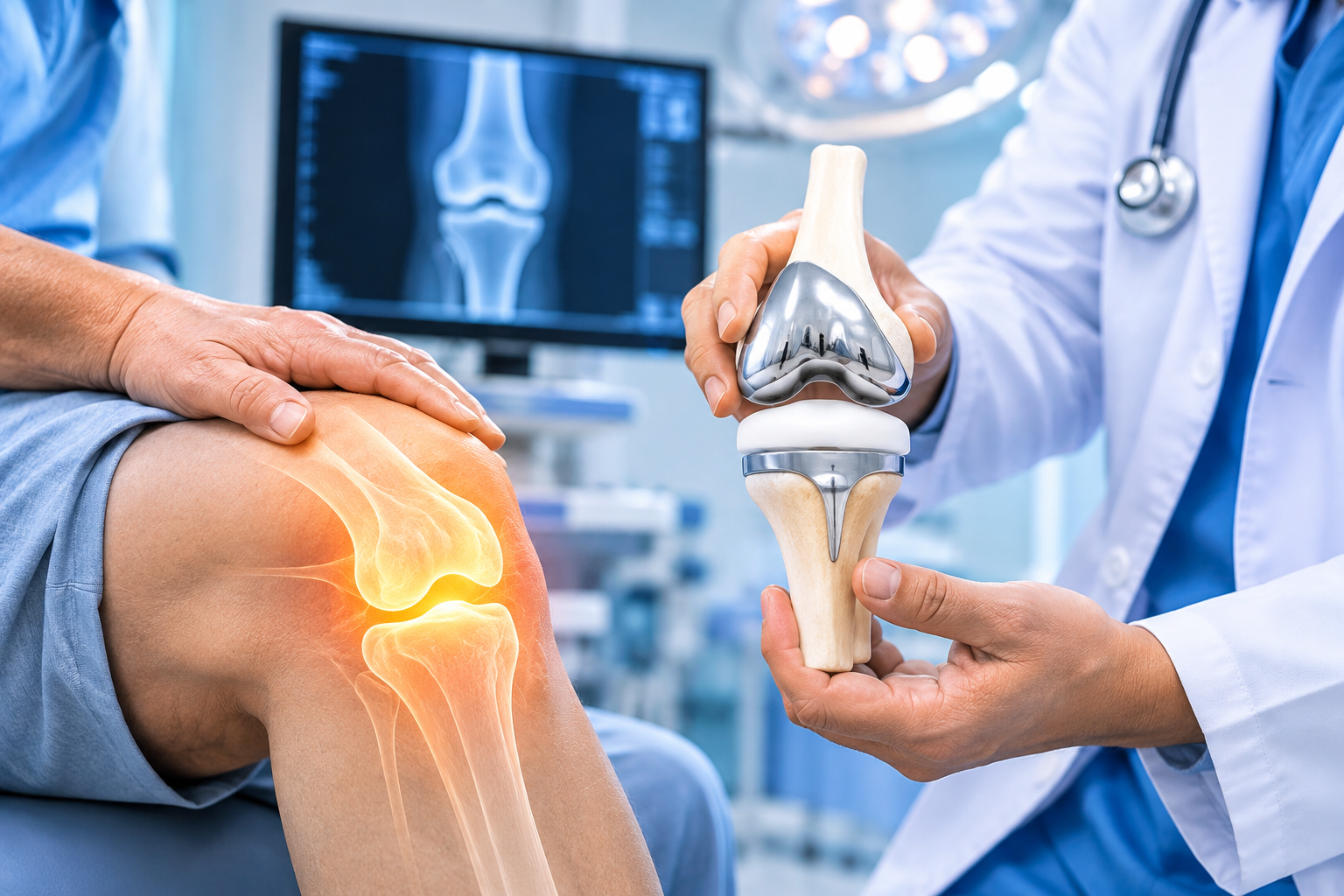
Total knee replacement, also known as total knee arthroplasty (TKA), is a surgical procedure performed to replace damaged surfaces of the knee joint with artificial components.
The knee joint consists of the thigh bone (femur), shin bone (tibia) and kneecap (patella). Healthy cartilage allows these structures to move smoothly. However, arthritis and other joint conditions can gradually damage this protective cartilage.
During Total Knee Replacement Surgery in Lucknow, the surgeon removes damaged cartilage and a small amount of underlying bone before positioning artificial components in the joint.
The primary objectives of this procedure include:
- Reducing chronic knee pain.
- Improving joint movement and flexibility.
- Restoring better knee alignment.
- Improving walking and standing ability.
- Supporting daily physical activities.
For a detailed explanation, patients can refer to the American Academy of Orthopaedic Surgeons (AAOS) guide to total knee replacement.
Why Is Knee Replacement Surgery Required?

The knee supports body weight and plays an essential role in everyday movement. Over time, cartilage damage, inflammation and injuries may affect the normal functioning of the joint.
When joint damage becomes severe, patients may experience persistent pain and reduced mobility.
Some common conditions that may require knee replacement evaluation include:
1. Osteoarthritis
Osteoarthritis is one of the most common causes of knee joint damage. It develops when the protective cartilage gradually wears away.
As the cartilage becomes thinner, the bones may rub against each other, resulting in pain, stiffness and swelling.
2. Rheumatoid Arthritis
Rheumatoid arthritis is an autoimmune condition that causes inflammation in the joints. Long-term inflammation may damage cartilage and bone, affecting normal knee movement.
3. Post-Traumatic Arthritis
Previous knee injuries, fractures or ligament damage may increase the risk of developing arthritis. Severe joint damage following an injury can sometimes require surgical treatment.
4. Severe Knee Deformity
An orthopaedic surgeon can evaluate the condition and determine whether joint replacement is appropriate.
One of the major goals of Total Knee Replacement Surgery in Lucknow is to improve mobility and reduce discomfort caused by advanced knee arthritis. With appropriate treatment and rehabilitation, patients may gradually return to many everyday activities.
Symptoms That May Indicate the Need for Knee Replacement
Not every person experiencing knee pain needs surgery. However, persistent symptoms should be evaluated by a qualified medical professional.
Common symptoms include:
- Persistent pain while walking or standing.
- Knee pain even during rest.
- Swelling around the knee joint.
- Stiffness after sitting for long periods.
- Difficulty climbing stairs.
- Reduced ability to bend or straighten the knee.
- Difficulty getting up from a chair.
- Changes in knee alignment.
- Reduced ability to perform everyday activities.
If these problems continue despite medication, physiotherapy and other recommended treatments, a specialist may evaluate the need for total knee replacement.
Who Is an Ideal Candidate for Total Knee Replacement Surgery?
The decision to undergo Total Knee Replacement Surgery in Lucknow depends on the patient’s symptoms, medical history, imaging results and general health.
A surgeon may recommend the procedure when:
- Severe knee pain interferes with daily activities.
- X-rays indicate advanced joint damage.
- Non-surgical treatments have not provided adequate relief.
- Joint stiffness affects walking and movement.
- Knee deformity is affecting mobility.
- The patient’s overall health permits major surgery.
Age alone does not determine eligibility. A patient’s medical condition, activity level and expected benefits are more important considerations.
Types of Knee Replacement Surgery
Different surgical options are available depending on the extent and location of knee joint damage.
1. Total Knee Replacement
Total knee replacement involves resurfacing the damaged joint surfaces across the affected knee compartments. It is commonly considered when arthritis affects multiple parts of the knee.
2. Partial Knee Replacement
Partial knee replacement involves replacing only the damaged compartment while preserving healthier parts of the joint.
This option may be appropriate for selected patients whose arthritis is limited to one compartment.
3. Bilateral Knee Replacement
Bilateral knee replacement involves replacing both knee joints. Depending on the patient’s health and surgical assessment, both knees may be treated during one operation or in separate procedures.
4. Robotic-Assisted Knee Replacement
Robotic-assisted technology can support surgical planning and help surgeons with implant positioning and bone preparation in suitable cases.
Patients interested in advanced treatment options can explore Robotic Joint Replacement Surgery in Lucknow to learn more about this approach.
The choice of surgical technique depends on individual anatomy, joint damage and the surgeon’s assessment.
How Is Total Knee Replacement Surgery Performed?
Understanding the surgical process can help patients prepare for treatment.
Step 1: Pre-Surgical Assessment
Before surgery, the orthopaedic team reviews the patient’s medical history, symptoms and existing health conditions.
Common investigations may include:
- Knee X-rays.
- Blood tests.
- ECG.
- Physical examination.
- Additional medical assessments when required.
Step 2: Anaesthesia
The anaesthesia team selects an appropriate technique according to the patient’s health and surgical requirements.
Step 3: Removal of Damaged Cartilage
The surgeon removes damaged cartilage and prepares the joint surfaces for implant placement.
Step 4: Implant Placement
Artificial components are positioned on the prepared bone surfaces. A medical-grade plastic spacer is placed between the components to allow smooth joint movement.
Step 5: Final Assessment
The surgeon evaluates knee alignment, stability and movement before closing the surgical incision.
The procedure and implant selection are personalised according to the patient’s clinical condition.
Benefits of Total Knee Replacement Surgery
For appropriately selected patients, knee replacement can improve mobility and reduce the limitations associated with advanced joint damage.
Some important potential benefits include:
Reduced Knee Pain
One of the main objectives of surgery is to reduce pain caused by damaged joint surfaces.
Improved Mobility
Patients may gradually regain the ability to walk, stand and perform everyday movements more comfortably.
Better Knee Function
Replacing damaged joint surfaces can improve the mechanical functioning of the knee.
Improved Quality of Life
Reduced pain and better mobility may help patients participate more comfortably in routine activities.
Improved Joint Alignment
In selected patients, surgery can correct certain deformities associated with advanced arthritis.
Results vary from patient to patient, and complete restoration of normal knee movement cannot be guaranteed.
Recovery After Total Knee Replacement Surgery
Recovery is an important part of successful knee replacement treatment. Patients need appropriate rehabilitation, follow-up appointments and regular exercises under professional supervision.
The recovery period varies depending on age, overall health, muscle strength and rehabilitation progress.
Recovery after Total Knee Replacement Surgery in Lucknow requires patience, regular physiotherapy and proper medical supervision. Following the rehabilitation plan helps improve knee flexibility, muscle strength and walking ability.
Early Recovery
Immediately after surgery, the medical team monitors the patient’s condition and provides appropriate pain management.
When medically suitable, patients may begin gentle knee movements and assisted walking with the help of a physiotherapist.
Recovery During the First Few Weeks
Patients gradually work towards:
- Improving knee movement.
- Strengthening leg muscles.
- Managing swelling.
- Practising safe walking.
- Performing prescribed physiotherapy exercises.
Long-Term Rehabilitation
During the following months, patients continue Total Knee Replacement Surgery in Lucknow strengthening exercises and gradually increase their activity levels.
The complete recovery process may take several months or longer.
For additional information, read the NHS guide to knee replacement recovery.
Important Precautions After Knee Replacement
Following post-operative instructions is essential for safe recovery.
Patients should:
- Use walking support as recommended.
- Complete prescribed physiotherapy exercises.
- Avoid excessive strain on the operated knee.
- Keep the surgical wound clean.
- Take medicines according to medical advice.
- Attend scheduled follow-up appointments.
- Follow instructions regarding blood clot prevention.
- Avoid high-impact activities until medically cleared.
Sudden chest pain or breathing difficulty requires emergency medical attention. Fever, increasing wound redness, discharge or worsening leg swelling should be reported promptly.
Possible Risks and Complications of Knee Replacement Surgery
Like other major surgical procedures, knee replacement has certain potential risks.
Possible complications include:
- Infection around the surgical site or artificial joint.
- Blood clots in the legs.
- Bleeding.
- Persistent knee stiffness.
- Continued pain.
- Nerve or blood vessel injury.
- Implant loosening or wear.
- Requirement for additional surgery in some cases.
Patients should discuss their medical history and potential risks with their surgeon before undergoing treatment.
For more patient information, visit the NHS guide to knee replacement complications.
How Long Does a Knee Replacement Last?
Modern knee replacement implants are designed for long-term use. Many implants function for 15–25 years or longer, although their lifespan varies.
Several factors can influence implant longevity:
- Implant materials and design.
- Surgical technique and implant positioning.
- Patient body weight.
- Activity levels.
- Overall joint health.
- Follow-up and rehabilitation.
Maintaining a healthy weight, following medical advice and avoiding excessive high-impact activities can support long-term joint health.
Choosing the right specialist for Total Knee Replacement Surgery in Lucknow involves evaluating surgical experience, hospital facilities, diagnostic support and post-operative rehabilitation services.
How to Choose the Right Knee Replacement Surgeon in Lucknow?
Selecting an appropriate orthopaedic surgeon and hospital is an important step when considering joint replacement treatment.
Patients should evaluate the following factors before making a decision.
Experience in Joint Replacement
Look for a qualified orthopaedic surgeon with relevant experience in knee replacement procedures.
Diagnostic Facilities
Proper imaging and medical assessment help determine the extent of joint damage and the most appropriate treatment approach.
Surgical and Anaesthesia Team
A coordinated surgical and anaesthesia team is important for patient assessment, operative care and monitoring.
Physiotherapy and Rehabilitation
Rehabilitation is essential for improving joint movement, strength and walking ability after surgery.
Patient Care and Follow-Up
A comprehensive treatment plan should include pre-operative counselling, post-operative monitoring and regular follow-up appointments.
Patients searching for Total Knee Replacement Surgery in Lucknow should compare treatment options based on clinical expertise, hospital facilities, patient care and individual requirements.
You can also explore Knee Replacement Surgery in Lucknow for further information about knee replacement treatment.
What Is the Cost of Total Knee Replacement Surgery in Lucknow?
The cost of knee replacement surgery varies depending on the hospital, implant and individual treatment requirements.
Some factors that influence the overall cost include:
- Type and brand of knee implant.
- Whether one or both knees require surgery.
- Surgeon and hospital charges.
- Anaesthesia and operation theatre expenses.
- Room category and hospital stay.
- Pre-operative investigations.
- Medicines and rehabilitation.
- Existing medical conditions.
Patients should request a personalised estimate and a detailed breakdown of expenses from the hospital before proceeding with treatment.
Before deciding on Total Knee Replacement Surgery in Lucknow, patients should discuss implant options, expected outcomes, possible complications and recovery requirements with their orthopaedic surgeon.
Why Choose the Right Treatment for Knee Joint Problems?
Choosing the right treatment for knee joint problems is important for maintaining mobility and improving daily comfort. When severe arthritis or joint damage makes walking, climbing stairs, and performing routine activities difficult, Total Knee Replacement Surgery in Lucknow may be considered after a proper medical evaluation. An experienced orthopaedic specialist can assess the condition and recommend a suitable treatment approach based on the patient’s needs.
Importance of Expert Orthopaedic Consultation
Before undergoing knee replacement, patients should discuss their symptoms, medical history, treatment options, and recovery expectations with a qualified orthopaedic surgeon. During the consultation, the doctor may recommend physical examination and imaging tests to understand the extent of joint damage. Proper guidance helps patients make informed decisions about Total Knee Replacement Surgery in Lucknow and understand the benefits, limitations, and possible risks involved.
Long-Term Care After Knee Replacement Surgery
Successful recovery requires more than just the surgical procedure. Following the surgeon’s instructions, attending regular follow-up appointments, maintaining a healthy body weight, and completing prescribed physiotherapy can support joint movement and rehabilitation. Patients considering Total Knee Replacement Surgery in Lucknow should understand that recovery varies from person to person and consistent post-operative care plays an important role in achieving better mobility.
When Should You Consider Total Knee Replacement Surgery?
Many patients ask, “When do I need total knee replacement surgery?” The procedure may be recommended when severe knee arthritis causes persistent pain, stiffness, swelling, and difficulty walking, even after trying medicines, physiotherapy, or other non-surgical treatments. If knee pain is affecting your sleep and everyday activities, consult an orthopaedic specialist to understand whether Total Knee Replacement Surgery in Lucknow is an appropriate option for your condition.
How Much Does Total Knee Replacement Surgery Cost in Lucknow?
The cost of knee replacement surgery depends on several factors, including the type of implant, surgical technique, hospital facilities, surgeon’s experience, room category, and length of hospital stay. Patients searching for Total Knee Replacement Surgery Cost in Lucknow should request a personalised estimate after medical evaluation. Discuss the complete treatment package with the hospital to understand what is included and whether additional expenses may apply.
How Long Does It Take to Walk After Knee Replacement Surgery?
One common question among patients is how soon they can walk after knee replacement surgery. Many patients begin assisted walking within a short period after surgery under the guidance of their medical team. However, recovery time depends on overall health, muscle strength, surgical factors, and physiotherapy progress. People considering Total Knee Replacement Surgery in Lucknow should follow their surgeon’s rehabilitation plan rather than comparing their recovery with others.
Frequently Asked Questions About Total Knee Replacement Surgery in Lucknow
1. Is total knee replacement surgery painful?
Patients receive anaesthesia during surgery. Some discomfort is expected during recovery, but appropriate pain management and physiotherapy help manage the rehabilitation process.
Oue hospital provide pain management total knee replacement surgery in lucknow.
2. How many days does a patient need to stay in the hospital?
Hospital stay depends on the patient’s health, surgical approach and recovery progress. The treating team determines when it is safe to return home.
3. How long does recovery take after knee replacement?
Many patients resume several everyday activities within a few weeks. However, complete recovery may take several months or longer.
4. Can patients walk normally after knee replacement?
Many patients experience improved walking ability following recovery. The final outcome depends on pre-existing joint damage, muscle strength and rehabilitation.
5. Is knee replacement suitable for elderly patients?
Age alone does not determine suitability. Overall health, medical conditions and expected surgical benefits are considered during evaluation.
6. Can both knees be replaced at the same time?
Yes, simultaneous bilateral knee replacement may be considered for selected patients. The decision depends on overall health and surgical risk assessment.
7. How long does a knee replacement implant last?
Many modern implants function for 15–25 years or longer. Their lifespan varies depending on several patient and implant-related factors.
8. Is physiotherapy necessary after knee replacement?
Yes. Physiotherapy helps improve joint movement, muscle strength, balance and walking ability.
9. When can patients climb stairs after surgery?
Patients can start practising stairs when their surgeon and physiotherapist consider it safe. The timing depends on individual recovery.
10. Can knee arthritis be treated without surgery?
Early and moderate arthritis may be managed through appropriate exercise, physiotherapy, weight management and prescribed medicines. Advanced cases may require surgical evaluation.
Consult an Orthopaedic Specialist for Knee Replacement Treatment in Lucknow
If you are considering Total Knee Replacement Surgery in Lucknow, consult a qualified orthopaedic surgeon to understand your diagnosis, available surgical options, expected recovery and possible risks.
A personalised treatment plan, appropriate surgical care and consistent rehabilitation can help patients work towards better knee function and an improved quality of life.
For consultation and further treatment information, visit Best Ortho Specialist – Lucknow or contact the orthopaedic team.